Bangalore
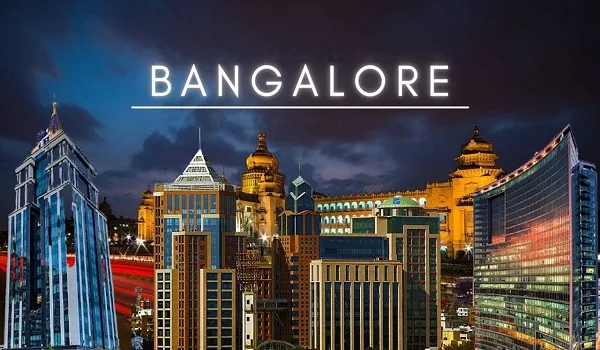
Bangalore (officially Bengaluru) is the capital of Karnataka and India's leading technology hub. It hosts one of the country's largest concentrations of IT-services firms, deep-tech startups, R&D centres and engineering talent. Bangalore consistently ranks among India's most dynamic real-estate markets. This page provides the city-level context for the Vaishnavi Vana project at Thurahalli, south Bangalore.
Bangalore at a Glance
| Attribute | Detail |
| State | Karnataka |
| Region | South India |
| Elevation | 920 m above sea level |
| Climate | Tropical savannah; mild year-round (15–35°C) |
| Municipal authority | Bruhat Bengaluru Mahanagara Palike (BBMP) |
| Metropolitan area | 1,200+ sq.km. |
| Population (urban agglomeration) | 13+ million |
| Time zone | IST (UTC +5:30) |
| Primary international airport | Kempegowda International Airport (BLR), Devanahalli |
| Metro system | Namma Metro — Purple Line, Green Line, Yellow Line (operational), Pink and Blue Lines under construction |
Bangalore's Major Sub-Markets
South Bangalore (Kanakapura Road belt)
South Bangalore covers Jayanagar, Banashankari, JP Nagar and Padmanabhanagar. The Kanakapura Road corridor (including Thurahalli where Vaishnavi Vana is situated) is part of the sub-market. Konanakunte, Bannerghatta Road and surrounding areas complete the footprint. It is historically Bangalore's most established residential quarter. The layouts are older and well-planned with mature social infrastructure. The Namma Metro Green Line operates through this zone. The eastern stretch reaches Konanakunte Cross.
South Bangalore
South Bangalore covers Banashankari, Jayanagar, JP Nagar, Kanakapura Road and Bannerghatta Road. It anchors South Bangalore's growing tech and residential belt, with NICE Road and the Kanakapura Road Green Line as the primary connectivity spine. Property values in the mature cores (Jayanagar, Banashankari) command among the highest South Bangalore rates, with newer corridors like Kanakapura Road offering upgrade-priced low-density inventory.
North Bangalore
North Bangalore covers Hebbal, Yelahanka, Jakkur and Hennur. It is anchored by Kempegowda International Airport and the airport-belt employment cluster. Growth drivers include airport proximity and Manyata Tech Park. The Bangalore Airport Metro Line will connect the area to the rest of the city by 2027–2028.
West Bangalore
West Bangalore covers Rajajinagar, Vijayanagar, Magadi Road and Tumkur Road. These are older established residential zones. Tech-park presence is growing around Peenya and the Tumkur Road corridor. The zone is generally more affordable than east and south Bangalore.
Central Bangalore
Central Bangalore covers MG Road, Brigade Road, Vittal Mallya Road, UB City and Lavelle Road. This is Bangalore's commercial and premium-retail core. New-construction residential inventory is limited. The market is primarily resale and premium redevelopments.
Major Tech Hubs in Bangalore
- Electronic City: South Bangalore's flagship tech park cluster (via NICE Road).
- Manyata Tech Park (Hebbal): North Bangalore's largest IT/ITeS cluster.
- Electronic City: South-south Bangalore's tech hub with Phase 1 and 2.
- Bagmane Tech Park (CV Raman Nagar): East-central tech cluster.
- Bannerghatta Road corridor: High-density tech and healthcare employment cluster with NICE Road access.
- Embassy TechVillage, Prestige Tech Park and the ORR tech corridor: South Bengaluru tech clusters reachable from Thurahalli within 18-20 km via ORR.
- Turahalli Reserve Forest (upcoming): New south-Bangalore IT park 2.5 km from Thurahalli.
Bangalore's Infrastructure Pipeline
- Namma Metro Phase 3: Major expansion across south, north and south Bangalore; key sections operational 2027–2030.
- Bangalore Airport Metro (Blue Line): Connects the airport to central Bangalore via Hebbal; operational 2027–2028.
- Satellite Town Ring Road (STRR): Outer orbital connector linking towns around Bangalore.
- the ORR–Bannerghatta elevated stretches (planning stage): Cuts south-Bangalore commute times.
- Bangalore Suburban Rail Project: Commuter rail lines connecting outlying towns.
- NICE Road expressway: Long-planned outer ring; sections progressing.
Bangalore Real-Estate Market Context
Bangalore's residential real-estate market has shown one of India's most consistent appreciation profiles over the last 5 years. Three factors support it. Tech-sector employment growth. Infrastructure investment. Quality-of-life parameters. Key trends across the city in 2026:
- Sub-market price ranges from ₹6,000/sq.ft. in peripheral neighborhoods to ₹20,000+ in premium central locations.
- South-Bangalore upscale band sits at ₹15,000–₹19,000/sq.ft. (Vaishnavi Vana's ₹14,545/sq.ft. pre-launch rate sits just below this band, giving early buyers an entry buffer).
- South Bangalore tech-belt upscale band: ₹12,000–₹16,000/sq.ft.
- North Bangalore airport-belt: ₹8,000–₹12,000/sq.ft.
- Year-on-year appreciation: 8–15% in most active sub-markets.
- Gross rental yields: 3.0–5.5% across residential segments.
Why Bangalore Matters for Vaishnavi Vana Investors
Bangalore's status as India's tech capital underwrites the long-term demand thesis for any residential project in the city. Strong employment growth means a continuous tenant pool and consistent capital appreciation. The Thurahalli–Thurahalli corridor benefits from three things. South Bangalore's deep residential demand. The Namma Metro Green Line. The upcoming Turahalli Reserve Forest. For Vaishnavi Vana, the city context provides multiple layers of demand support. Primary residents from south Bangalore. Tenants from the surrounding tech belt. HNI / NRI buyers drawn to Bangalore's overall market profile.
Frequently Asked Questions about Bangalore Context
1. Why is Bangalore considered India's tech capital?
Bangalore hosts the country's largest concentration of IT-services firms, global captive centres, deep-tech startups, R&D operations and engineering talent. Over 40% of India's IT exports originate from Bangalore-based companies. The city also houses a disproportionate share of unicorn startups.
2. How does south Bangalore compare with south Bangalore for real estate?
South Bangalore has a distinct residential character built around mature cores and green edges rather than dense tech belts. Rates in South Bangalore vary widely by sub-locality, with Jayanagar and Banashankari at the top and Kanakapura Road upgrade belts pricing lower. South Bangalore has more mature residential infrastructure, established schools and hospitals, and slightly lower density. Many buyers pick mature South Bangalore cores for owner-occupation and Kanakapura Road low-density belts for the newer-build upgrade format.
3. What's Bangalore's metro coverage like?
Namma Metro currently operates Purple Line (east-west), Green Line (north-south) and the Yellow Line (south-east). Phase 3 expansion will add the Pink Line, additional sections, and the Blue Line connecting to the airport. By 2030, metro coverage will span most of the city's high-density residential and commercial zones.
4. What is the long-term outlook for Bangalore real estate?
Long-term outlook is positive. Tech-sector employment continues to expand, metro and road infrastructure investment is sustained, and the city benefits from India's broader economic growth. Sub-markets vary, but city-level appreciation has consistently outpaced India's national average over recent decades.
5. Is Bangalore a good city for NRI investors?
Yes — Bangalore is among India's most NRI-friendly real-estate markets. RERA-registered developers offer high transparency, Karnataka RERA filings are accessible online, partner-bank NRI loan products are standard, and the city's English-language ecosystem makes long-distance management straightforward. Upscale low-density projects like Vaishnavi Vana are popular with NRI buyers seeking Bangalore second homes.
6. How easy is it to commute across Bangalore?
Bangalore's commute experience varies by route and time of day. Metro and signal-free orbital roads (Outer Ring Road) handle cross-city traffic reasonably well; arterial roads can see significant peak-hour congestion. The city's ongoing metro expansion progressively reduces dependence on roads. For a project like Vaishnavi Vana, the walking-distance metro access is one of the strongest commute insulators.
Vaishnavi Vana Blog